The Second Virginia Breeding Bird Atlas
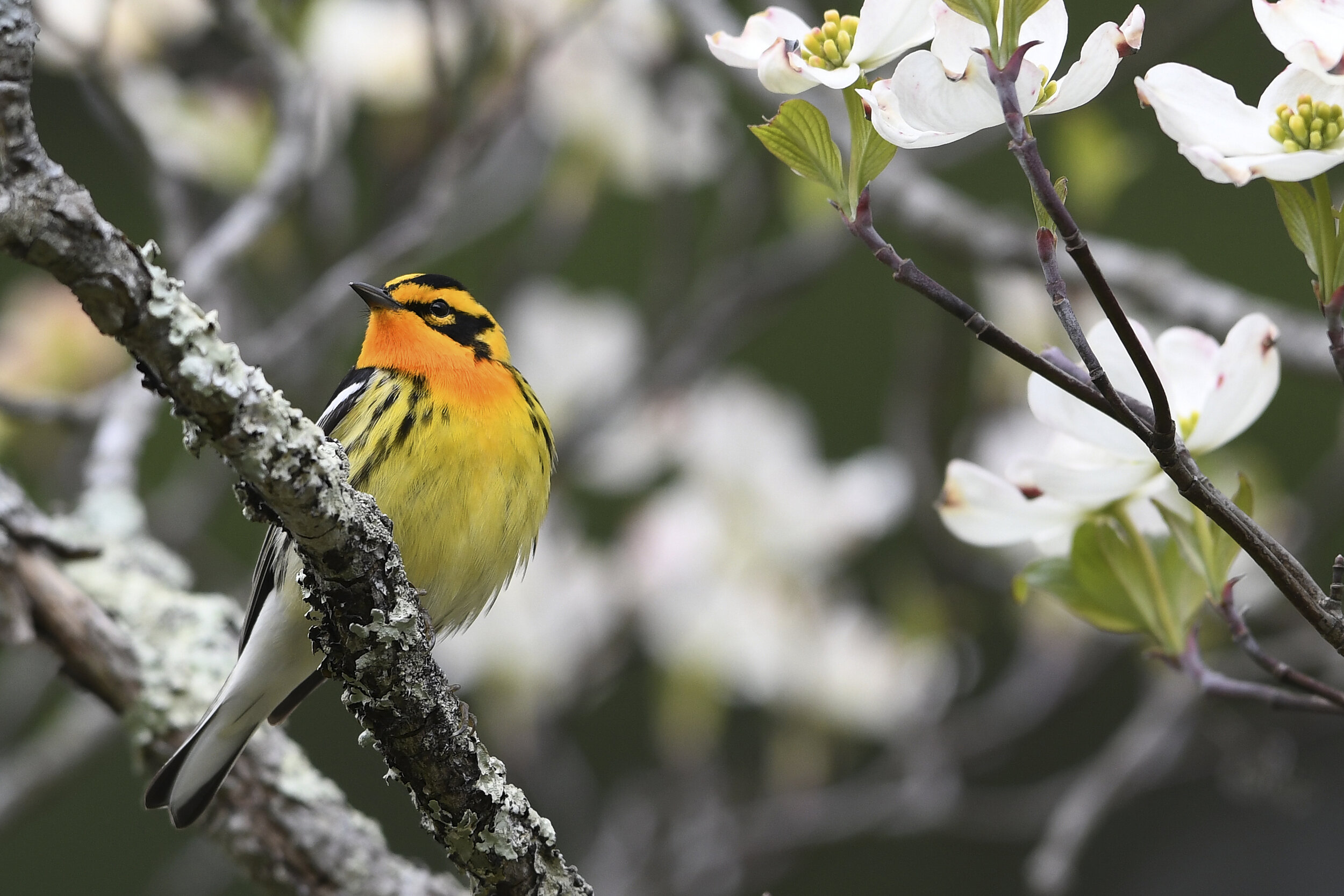
Photo: Blackburnian Warbler, Dick Rowe
What is the Virginia Breeding Bird Atlas
VSO’s Vision for the Atlas
The Second Virginia Breeding Bird Atlas presents information on the distribution of Virginia’s breeding bird populations and the timing of their breeding activity – where and when they breed. In the species account for each of the 203 breeding species, population trends and conservation needs are also discussed. The accounts are based on field data collected during 2016-2020 and, where possible, findings are compared with those of the first Atlas from 1985-1989.
The Atlas sheds light on changes in distribution, numbers and abundance for individual species over the past 30 years, reflecting the impacts of habitat changes, climate change, and many other factors.
Why an Atlas ?
The Cornell Laboratory of Ornithology estimates that North American bird populations have declined by nearly 3 billion birds since the 1970s. Thus, we face a major conservation challenge.
Having an improved understanding of where our bird species currently occur, in what numbers, and how their distribution within Virginia has changed over the past quarter century enables us to more efficiently target conservation efforts and actions on the ground.
The Atlas can be used in many aspects of conservation, discussed in Contributions to Conservation and, where applicable, species accounts are linked to the Species of Greatest Conservation Need identified by the Virginia Department of Wildlife Resources.

Prothonotary Warbler, Dixie Sommers
What is in the Atlas?
In addition to species accounts and Contributions to Conservation, the Atlas summarizes results from the data, identifying eight new species breeding in Virginia and ten no longer breeding in the state, species with expanding or contracting breeding ranges since the first Atlas, and population trends. Atlas methods are also described.
Additional sections of the Atlas describe Virginia’s habitats, geography and climate, and using the Atlas in research and education, including examples of how the Atlas supports Virginia Standards of Learning (SOLs). And there is even information on how you can support birds!
Who is involved in the Atlas project?
The Atlas is the result of collaboration among the VSO, the Virginia Department of Wildlife Resources, and the Conservation Management Institute at Virginia Tech.
Creation of the Atlas was made possible by the efforts and financial support of hundreds of individuals and organizations who collected data in the field, analyzed data, prepared the results published on this website, provided photographs, and donated time and money. The VSO is grateful to them all!
You can support Conservation by Sponsoring a Species!
With the completion of the second Atlas, our focus on conservation is intensified. You can help!
Sponsor your favorite bird that breeds in Virginia! Your donation will support the VSO’s conservation efforts. And you will be recognized on the Atlas’ species account page!


